 Hans Rustad
 Den 12. mai vil pave Frans helgenkåre 800 på en gang. Det er en meget spesiell kåring: ottomannerne halshogg 800 innbyggere i byen Otranto i Italia i 1480. De ofret seg for at ikke Roma skulle lide Konstantinopels skjebne.
Den samme sultan, Muhammed II, som hadde erobret det annet Rom, var nemlig kommet med en stor flåte for å innta det første.
Otranto holdt ut i to uker, lenge nok til at kongen av Napoli fikk organisert en forsvarsstyrke. Rom ble ikke inntatt. Hadde det skjedd kunne Europa historie blitt en annen.
Det er ikke pave Frans selv som har funnet på å helgenkåre de 800. Det var noe av det siste Benedikt 16. gjorde før han gikk av. Frans er opptatt av å ha et godt forhold til islam og muslimer. Han ville kanskje ikke gjort noe så spektakulært.
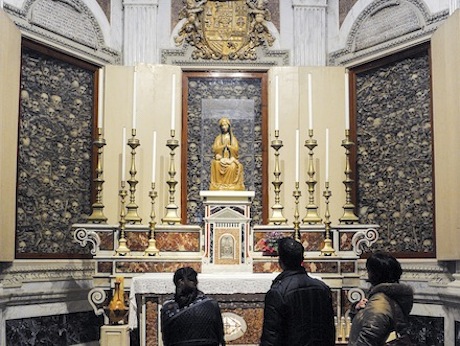
I katedralen i Otranto er historien høyst levende. Der er hodeskallene til de drept murt inn i muren rundt alteret.
Hva gjør dem til martyrer verdige til å bli helgener? De ble ikke bare drept just like that, de ble drept fordi de nekte tå konvertere til islam.
The 800 men of Otranto – whose names are lost, except for that of Antonio Primaldo, an old tailor – were rounded up and killed because they refused to convert to Islam. In 2007, Pope Benedict recognised them as martyrs “killed out of hatred for the faith”. That is no exaggeration. Earlier, the Archbishop of Otranto had been cut to pieces with a scimitar.
Some accounts of the martyrdoms will raise a sceptical eyebrow: Primaldo reportedly remained standing after he was decapitated, a Pythonesque miracle that stretches credulity.
But the murders really happened, and their significance is immense. The Turks had been sent by Mohammed II, who captured the “second Rome” of Constantinople and planned to do the same to the first. His fleet landed in Otranto, Italy’s easternmost city, and laid siege. The citizens held out for two weeks, allowing the King of Naples to muster his forces. Rome did not fall.
Historien går rett inn i dagens politiske situasjon: noen ser paralleller til vår egen tid. Også i dag får kristne valget mellom å konvertere eller dø.
“All of this took place because of the indifference of the political leaders of Europe to the Ottoman menace,” wrote the conservative Italian senator Alfredo Mantovano in an article about the martyrdoms in 2007. You can guess where his argument was heading. “In Otranto, no one displayed rainbow pacifist flags, nor invoked international resolutions… Today Europe is under attack, not by an institutionally organised Muslim phalanx but by a patchwork of non-governmental organisations of fundamentalist Muslims.”
Det er neppe et perspektiv som pave Frans abonnerer på. Men det er samtidig et perspektiv han må ta hensyn til. Muslimenes inntok i Europa vekker minner fra den gang til live, ikke minst når salafister begynner å drømme om å gjenerobre Sicilia, og store deler av Spania. Den politisk rensede versjonen fremstiller korstogene som aggressive og voldelige, mens muslimenes erobringstokt og angrep på Europa passerer ubemerket. I lengden er dette en uholdbar situasjon, skriver Damian Thompson i Telegraph:
There are, however, good secular reasons for welcoming this canonisation. Our history is distorted by a nagging emphasis on Christian atrocities during the Crusades combined with airbrushing of Muslim Andalusia, whose massacre of Jews in 1066 and exodus of Christians in 1126 are rarely mentioned. Otranto reminds us that Islam had its equivalent of crusaders – mighty forces who nearly captured Rome and Vienna.
The Muslim Brotherhood is still committed to a restored Caliphate; this week its supporters prophesied the return of a Muslim paradise to Andalusia. These are pipe dreams, it goes without saying. But they matter because they inspire freelance Islamists whose fascination with southern Europe has nothing to do with welfare payments. They think of it as theirs because they know bits of history that we’ve forgotten.
Our amnesia comes in handy in dialogue with Muslims: we grovel a few apologies for the Crusades, sing the praises of the Alhambra, and that’s it. But what does this self-laceration achieve? Arguably it’s counterproductive, because it shows Muslims that we’re ashamed of our heroes as well as our villains. Which is why the mass canonisation of 800 anonymous men is so welcome: it ensures that, even though the West has forgotten their names, it won’t be allowed to forget their deaths.
http://blogs.telegraph.co.uk/news/damianthompson/100215281/martyred-for-christ-800-victims-of-islamic-violence-who-will-become-saints-this-month/